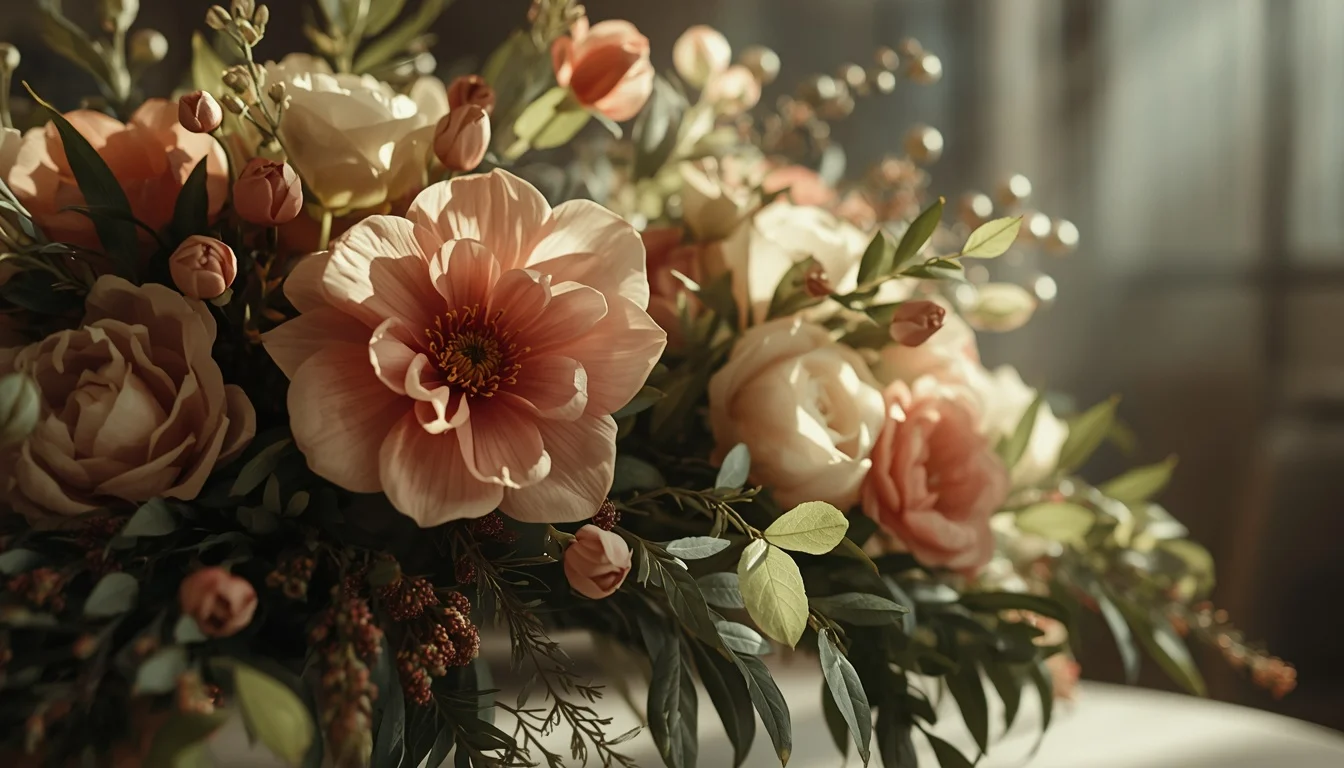
Creating Atmosphere Through Flowers
Flowers can change the way a space feels before guests have even taken their seats. Color, shape, scent, height, texture, and movement all contribute to the atmosphere of a room or outdoor setting. A carefully designed floral display can make an entrance feel welcoming, a dinner feel more intimate, a ceremony feel meaningful, or a business event feel polished and memorable.
Effective floral design begins with the space rather than a standard catalog arrangement. The designer considers the venue’s architecture, lighting, furniture, ceiling height, walkways, color palette, and natural surroundings. A coastal event may call for a light, relaxed design, while a formal ballroom may suit structured arrangements with dramatic height. A private home, restaurant, hotel, garden, gallery, or office each creates different opportunities.
Customers may have a clear vision or only a general feeling they want to create. Words such as elegant, modern, romantic, natural, joyful, refined, abundant, and understated can guide the design conversation. The florist can translate those ideas into flowers, foliage, vessels, installations, table pieces, and practical details that suit the event.
The strongest results combine creativity with planning. Flowers must be sourced, conditioned, stored, arranged, delivered, installed, and sometimes removed after the event. Timing, venue access, weather, guest movement, and other vendors all influence the work. A professional floral team creates beauty while keeping the setup organized, safe, and respectful of the location.
Wedding Floral Design
Wedding flowers often connect many parts of the celebration. The ceremony entrance, aisle, altar, arch, welcome table, reception, cake table, sweetheart table, guest tables, and lounge areas can share colors and textures without looking identical. A coordinated plan allows each area to feel special while maintaining a visual connection throughout the day.
The ceremony setting usually provides the first major floral impression. An arbor or arch can frame the couple, while aisle arrangements guide the eye and add movement to the space. Ground arrangements, meadow-style flowers, hanging designs, and statement installations can suit different venues and styles. The structure must be stable and appropriate for the surface, wind, lighting, and movement around it.
Reception designs should support the way guests use the room. Centerpieces need to allow conversation and should not obstruct views across the table. Tall arrangements can add drama in a large venue, while low pieces may create a warmer and more intimate feeling. Floral choices should also leave enough room for plates, glasses, candles, menus, and service staff.
Personal flowers can be coordinated with the larger decoration. Bouquets, boutonnieres, corsages, flower crowns, and flower girl pieces can repeat key colors or varieties. The result should feel connected without becoming overly uniform. A thoughtful wedding plan reflects the couple’s personality and makes the flowers part of the memory rather than an unrelated layer of decoration.
Event and Corporate Floral Design
Corporate gatherings, product launches, fundraisers, conferences, galas, openings, award ceremonies, and holiday celebrations can all benefit from professional floral design. Flowers may welcome visitors at the entrance, identify a registration area, highlight a stage, frame a presentation, or make a dining space feel more complete.
Business events often require a balance between visual impact and brand awareness. A modern arrangement may use a limited palette that complements the company’s identity without turning the room into an advertisement. Repeated colors, consistent vessels, and carefully placed arrangements can create a polished environment across multiple rooms or event areas.
Large-scale installations require detailed planning. Floral walls, hanging pieces, staircase decorations, entry displays, stage arrangements, and suspended designs must account for venue rules, ceiling height, weight, lighting, fire safety, guest movement, and installation time. The design should be impressive, but it must also be secure and practical for the location.
Event teams often work within tight schedules. The florist may need to coordinate with planners, caterers, rental companies, lighting technicians, venue managers, and photographers. A professional crew arrives prepared, protects floors and surfaces, keeps tools and packaging organized, and removes materials as agreed. Efficient coordination helps the venue look finished when guests arrive.
Private Parties and Home Decoration
Floral design can make a private gathering feel carefully considered without becoming formal or excessive. Birthdays, anniversaries, showers, holiday dinners, graduation celebrations, engagement parties, and family occasions may call for table flowers, entry displays, buffet arrangements, mantel pieces, bar decorations, or small floral accents throughout the home.
Home-based events require attention to scale and movement. A centerpiece should suit the size of the table, while arrangements near a walkway should not create an obstacle. Flowers placed near food need suitable vessels and careful positioning. Designs should complement the home’s colors, furniture, artwork, and natural light rather than competing with the space.
Outdoor events offer additional possibilities. Floral designs can decorate a patio, garden, poolside area, tent, pergola, or long dining table. Weather, wind, heat, shade, and water access should be considered before selecting flowers and mechanics. A design that looks beautiful indoors may need different support and materials outside.
The host may prefer an abundant garden style, a clean modern arrangement, a seasonal display, or a simple collection of bud vases. Professional guidance can help balance the desired look with the budget and the time available for setup. The result should make the space feel welcoming while allowing guests to move, dine, talk, and enjoy the occasion comfortably.
Seasonal Flowers and Sustainable Details
Seasonal flowers bring natural variation to a design. Their colors, textures, sizes, and availability change throughout the year, which allows each event to feel connected to its time and setting. Flexible flower selection gives the designer more freedom to choose the freshest and most attractive materials available.
Customers often have a preferred color palette rather than one exact flower. This approach can produce a stronger result because it allows substitutions when weather, supply, or quality affects a particular variety. Branches, foliage, grasses, berries, flowering stems, and natural textures can add depth while supporting the overall style.
Sustainability can be part of the planning process. Reusable vessels, foam-free mechanics where suitable, seasonal sourcing, responsible disposal, and floral reuse can reduce unnecessary waste. Ceremony arrangements may be moved to the reception, large displays may be divided into smaller pieces, and centerpieces may be given to guests after the event.
Care continues after installation. Flowers should be kept away from damaging heat, direct sunlight, and strong air movement when possible. Containers need suitable water levels and stable placement. For longer events, the florist may plan refresh visits, replacements, or adjustments. Practical care helps the decoration remain attractive from the first guest arrival through the final photograph.
Planning with a Floral Designer
A consultation should cover the event date, venue, guest count, style, color palette, budget, ceremony and reception areas, delivery, setup, breakdown, vessels, rentals, and venue restrictions. Photos, floor plans, inspiration images, and a list of priority areas can help the designer understand the desired result. Customers do not need to know every flower name before the conversation begins.
The designer should explain which choices have the greatest effect on cost. Flower variety, season, quantity, installation labor, structure, vessel rental, delivery distance, and event timing can all influence the proposal. A flexible color direction may allow the florist to choose better materials, while a highly specific design may require advance sourcing and additional planning.
A written proposal should identify the planned arrangements, quantities, materials, labor, delivery, installation, breakdown, rentals, and any additional charges. For larger events, a design board, floor plan, or itemized schedule can help the customer, planner, venue, and other vendors remain aligned. Changes should be documented so expectations stay clear.
The right floral partner combines artistic judgment with dependable service. Whether the project involves a wedding ceremony, corporate event, private dinner, hotel lobby, retail space, or home celebration, the finished design should enhance the setting without overwhelming it. With thoughtful planning, suitable flowers, careful installation, and clear communication, a room can feel more welcoming, personal, and memorable for everyone who enters.