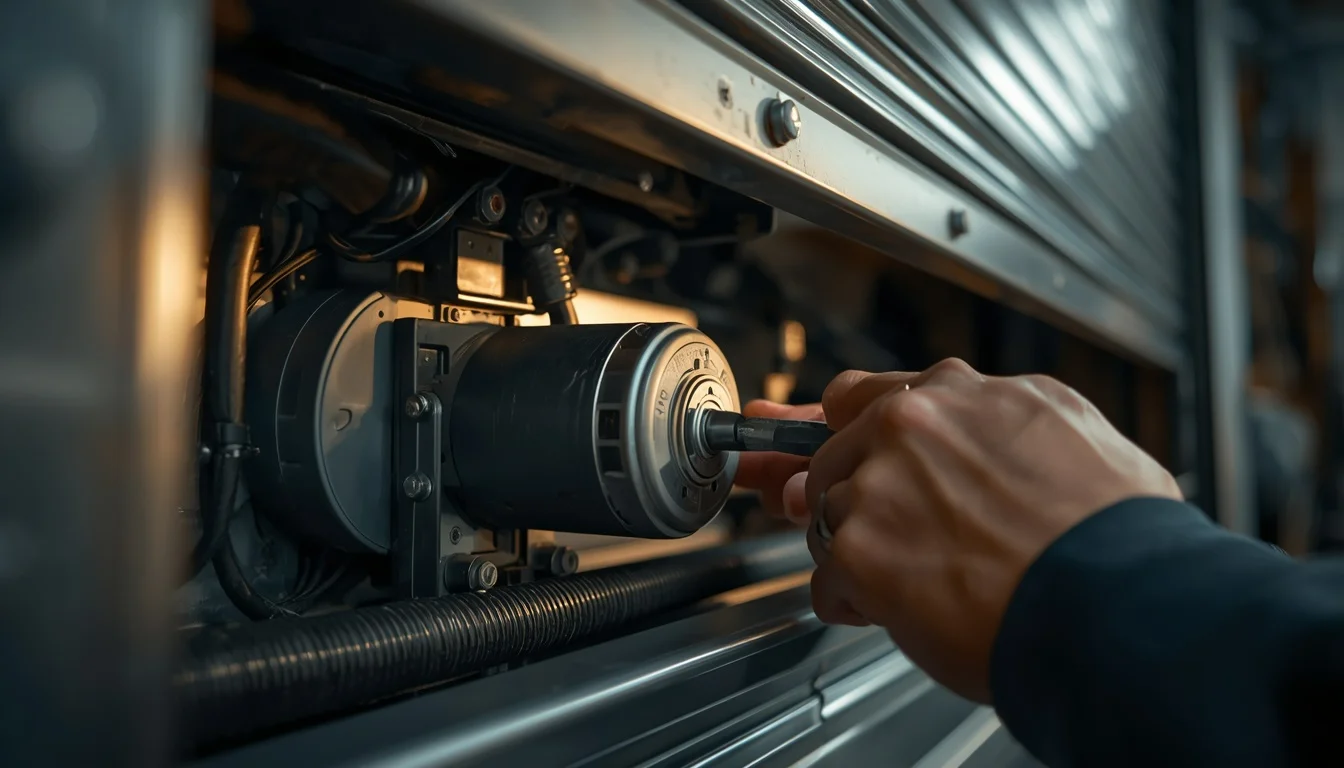
Recognizing When a Motor Needs Attention
Motorized roller shutters provide convenient control for windows, doors, shopfronts, and other openings. With a switch, remote control, timer, or smart system, the curtain can be raised and lowered without manual effort. When the shutter becomes slow, noisy, uneven, or unresponsive, the motor may be approaching the end of its service life. A timely assessment can restore reliable operation and protect the rest of the mechanism.
The motor is only one part of the system. Guides, slats, barrel, axle, springs, wiring, controls, and limit settings all influence performance. A shutter that stops halfway may have a motor fault, but it may also be obstructed, misaligned, overloaded, or affected by a damaged guide. Replacing the motor without checking the complete assembly can lead to repeated problems and unnecessary expense.
Common warning signs include humming without movement, intermittent operation, a curtain that moves more slowly than usual, unusual vibration, overheating, or a motor that stops before reaching its normal position. A remote control or wall switch may also fail to produce a response. The professional tests the power supply and control system before deciding whether the motor itself should be replaced.
Homeowners should avoid forcing a shutter when it is stuck. Continuing to operate a damaged system can strain the motor, bend slats, pull the curtain out of its guides, or damage the barrel. Note when the problem occurs, whether it affects one direction or both, and whether it followed a power interruption, storm, impact, or renovation. These details help the technician prepare for an efficient service visit.
Diagnosing the Complete Shutter System
The assessment begins with the condition of the curtain and guides. Dirt, bent slats, loose fixings, or a deformed side channel can create resistance that makes a healthy motor appear weak. The technician checks whether the curtain travels evenly and whether it rolls correctly around the barrel. Any mechanical obstruction should be addressed before a new motor is installed.
The power supply and controls are then tested. A tripped breaker, loose connection, failed switch, depleted remote battery, receiver problem, or damaged cable can prevent the motor from responding. Electrical testing should be completed safely and with appropriate instruments. The technician confirms that the motor receives the expected supply and that the control signal reaches the correct unit.
Limit settings are also reviewed. The motor needs to stop at suitable upper and lower positions. Incorrect limits can cause the curtain to overrun, remain partly open, or press against the sill and housing. In some cases, resetting or reprogramming the limits solves the problem. In others, a worn internal component makes replacement more practical.
The age, size, weight, and usage of the shutter influence the recommendation. A small residential curtain may use a different motor from a large insulated or commercial shutter. The technician checks the torque requirement, tube diameter, mounting arrangement, control method, and available space. Selecting a motor with the correct capacity helps prevent overheating and premature wear.
Selecting a Compatible Replacement Motor
A replacement motor must match the shutter’s mechanical and electrical characteristics. Torque is especially important because the motor must lift the curtain without excessive strain. A motor that is too weak may stall, while an oversized model may place unnecessary stress on the guides, slats, barrel, and fixing points. The correct selection is based on the complete system rather than the motor label alone.
The tube or barrel profile determines which motor can be fitted. Adapters, brackets, end plates, and mounting components must be compatible with the existing arrangement. The professional checks whether the new unit can be installed without damaging the housing or changing the curtain position. If components are worn, replacing related parts at the same time may provide better long-term value.
Control options should match the homeowner’s preferences. A wired wall switch can be simple and dependable, while a radio motor can work with remote controls, timers, sensors, and automation systems. Some installations require a manual override in case of a power interruption. The professional explains the benefits and limitations of each option before the replacement is ordered.
Noise level, speed, warranty, serviceability, and energy use may also influence the decision. A newer motor may operate more quietly and offer improved control, but it still needs to be installed correctly. The homeowner should receive information about product coverage, replacement parts, programming, and what to do if the shutter does not respond after a power failure.
Replacement Process and Safety
Motor replacement begins with securing the work area and isolating electrical power. The shutter curtain is supported as needed, and the housing is opened carefully. Depending on the design, the curtain may need to be released from the barrel so the motor can be removed. Large or heavy shutters require suitable access equipment and additional support to prevent movement.
The old motor and related mounting components are removed without damaging sound parts. The technician checks the barrel, axle, guides, end plates, slats, wiring, and fixing points. Any debris or obstruction inside the housing is cleared. If the curtain has been distorted by previous operation, it may need adjustment before the new motor is fitted.
The replacement motor is installed according to the manufacturer’s instructions. Connections are made securely, cables are protected from rubbing and movement, and the motor is positioned so the barrel remains aligned. The curtain is reattached, and the housing is closed only after the system has been tested through its operating range.
The upper and lower limits are programmed, and the control device is paired or connected. The technician checks opening, closing, stopping, reversing, manual override, and any safety function included with the system. The shutter should travel smoothly without scraping, twisting, excessive noise, or pressure at the end positions.
Performance, Maintenance, and Troubleshooting
A new motor performs best when the entire shutter is kept clean and aligned. Guides should be inspected for dirt, stones, paint, and damage. Do not apply unsuitable grease or oil because some products attract dust or affect plastic and rubber components. Ask the installer which maintenance product, if any, is compatible with the system.
Avoid operating the shutter repeatedly when it is obstructed or moving unevenly. A motor may have thermal protection that pauses operation after repeated cycles or overheating. Allowing it to cool may restore temporary function, but repeated thermal cutouts should be investigated. The underlying friction, load, or electrical problem may still be present.
Remote controls and smart devices should be kept in good condition. Replace batteries when needed, protect controls from moisture, and maintain updated settings. If one shutter fails while others work, the issue may be local to the motor, receiver, wiring, or curtain. If multiple units stop together, check the power supply, central control, and protective devices.
Regular professional checks can be useful for large shutters, commercial premises, frequently operated systems, and units exposed to wind or dust. Early adjustment of guides, limits, and fixings helps reduce stress on the motor. A maintenance record can also help identify repeated patterns and support warranty or service decisions.
Choosing a Qualified Technician
Select a professional with experience in both motorized shutters and the type of motor you need. Residential roller shutters, garage doors, security curtains, screens, and commercial systems may use different components and control methods. Ask for examples of comparable work and confirm that the technician can assess the curtain, guides, barrel, wiring, and controls as a complete unit.
The estimate should identify diagnosis, motor model, adapters, brackets, electrical work, programming, testing, disposal, and warranty information. If related parts may need replacement, ask how additional work will be explained and approved. A clear written scope helps the homeowner compare options and understand whether repair, motor replacement, or a full system upgrade provides the best value.
A dependable technician protects the opening and surrounding finishes, works safely, keeps the area organized, and explains the new controls before leaving. They should test the shutter several times and confirm that it stops at the correct positions. References, insurance, relevant qualifications, and product knowledge provide further reassurance.
A new shutter motor can restore dependable automation, smoother movement, improved convenience, and better control over privacy and sunlight. By diagnosing the complete system, selecting a compatible motor, installing it safely, programming the limits, and checking every operating function, an experienced technician can deliver a lasting result. Careful maintenance and prompt attention to new warning signs help protect the investment for years.