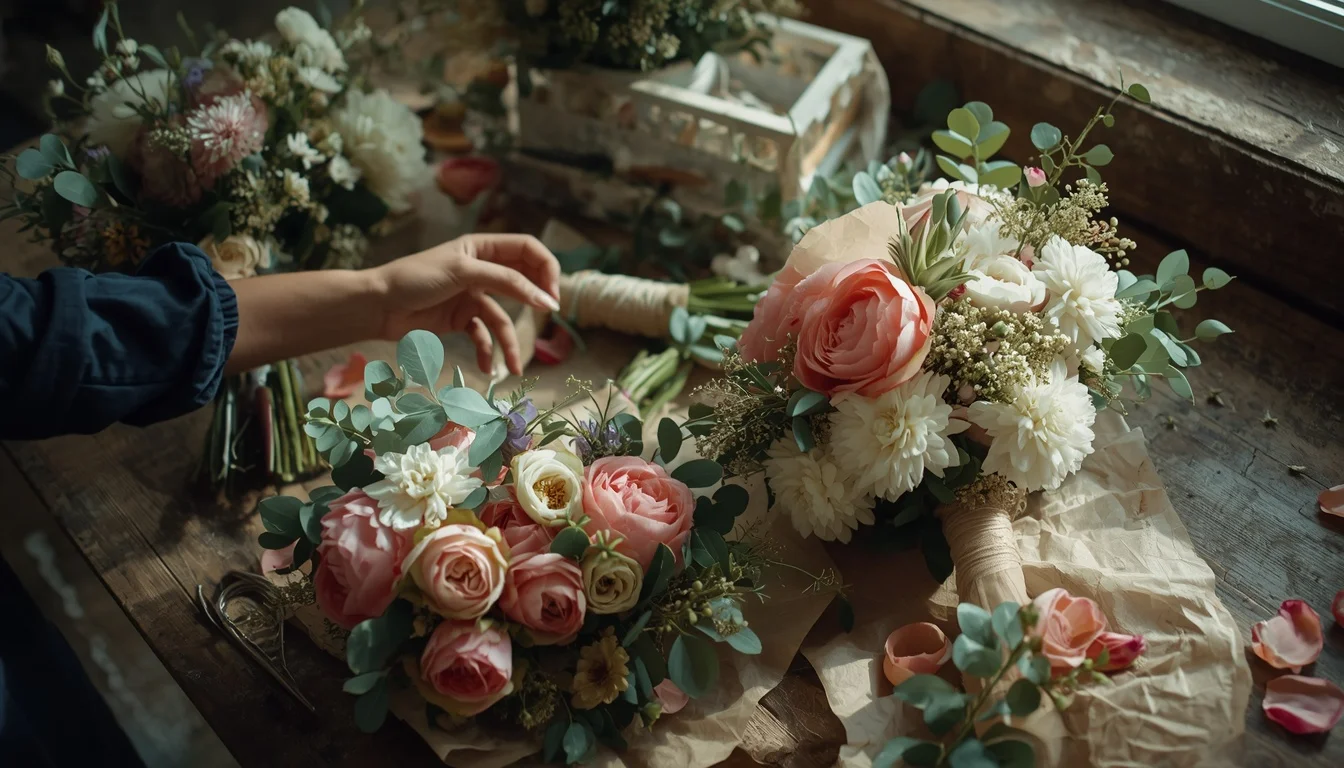
A bouquet can be bright and joyful, quiet and elegant, natural and relaxed, or bold enough to become the focus of an entire room. The best designs are not simply collections of attractive flowers. They balance color, shape, texture, scent, proportion, and movement while reflecting the person, occasion, and setting for which they were created.
A customer may know exactly what is wanted or may only have a general idea. Favorite colors, a preferred style, a meaningful flower, a seasonal feeling, or a particular mood can all guide the design. A professional bouquet designer listens carefully and turns those details into a composition that feels personal rather than ordinary.
The size and shape of the bouquet should also suit its purpose. A compact hand-tied design may be ideal for a gift, while a larger arrangement can welcome guests in a home or reception area. A wedding bouquet needs to feel comfortable to carry and suitable for photographs. A sympathy design should communicate respect and care. Every choice influences how the finished bouquet will be experienced.
Freshness is equally important. Flowers should be selected for quality, conditioned correctly, and arranged with enough support to remain attractive through delivery and display. The right care instructions help the recipient keep the bouquet looking beautiful for as long as possible. Thoughtful design and careful handling work together from the first stem to the final presentation.
Bouquets for Weddings and Bridal Parties
Wedding bouquets often become one of the most remembered floral details of the day. The bridal bouquet should complement the dress, ceremony style, venue, and personal taste without feeling disconnected from the larger floral design. Its size, weight, handle, shape, and flower selection all matter because the bouquet will be carried, photographed, and held throughout important moments.
A loose garden-style bouquet may suit a relaxed outdoor celebration, while a structured design can complement a formal ceremony. A rounded bouquet creates a classic silhouette, while a cascading arrangement adds movement. Single-color designs can feel refined, and mixed palettes can introduce depth through different shades and textures.
Bouquets for attendants should coordinate with the main design without needing to be identical. Smaller versions may use a similar flower palette, while different shapes or accent colors can help each person’s bouquet feel distinct. Boutonnieres, corsages, flower crowns, and flower girl pieces can repeat key details and create a complete visual story.
Wedding bouquets also need to be practical. The handle should be comfortable, the flowers should be secure, and the design should be suitable for the temperature and length of the event. A professional may provide advice about storage, transportation, water, photographs, and how to preserve or repurpose the bouquet after the ceremony. Personal attention helps the flowers remain beautiful during every part of the celebration.
Bouquets for Gifts and Life’s Important Moments
Flowers can express congratulations, gratitude, affection, sympathy, encouragement, welcome, and remembrance. A bouquet for a new home may be colorful and cheerful, while an anniversary design may use romantic tones and meaningful varieties. A birthday arrangement can reflect the recipient’s favorite colors, and a thank-you bouquet may be smaller, refined, and easy to display.
The recipient’s lifestyle can guide the design. Someone with limited space may prefer a compact bouquet in a simple vase, while a person who enjoys entertaining may appreciate a fuller arrangement for the dining table. A customer can also request a style that suits an office, bedside table, entryway, kitchen island, or outdoor gathering.
Sympathy flowers require a thoughtful approach. The design should communicate care and respect without being overwhelming. Soft colors, natural shapes, and elegant foliage can create a calm presentation, while the choice of flowers may be influenced by family preferences, cultural customs, service arrangements, or delivery location. Clear communication helps ensure that the bouquet is appropriate for the situation.
Presentation adds meaning to the gift. A bouquet may be hand-tied with ribbon, placed in a vase, arranged in a basket, or delivered with a personal card. The container and wrapping should support the flowers rather than distract from them. Care instructions give the recipient a simple way to keep the design fresh and enjoy the gesture for longer.
Seasonal Flowers and Custom Color Palettes
Seasonal flowers bring natural character to a bouquet. Their availability, color, texture, and shape change throughout the year, creating opportunities for designs that feel connected to the time and place. Spring flowers may suggest freshness and lightness, while summer varieties can offer bold color and abundant texture. Autumn materials often add warmth, and winter designs may use rich tones, branches, berries, or elegant foliage.
Customers often begin with a color palette rather than a specific flower. This flexibility allows the designer to select the freshest options available and create better balance within the arrangement. Soft neutrals, bright jewel tones, blush shades, whites and greens, or a single-color design can each produce a different emotional effect.
Texture gives a bouquet its personality. Rounded blooms, delicate filler flowers, strong stems, airy grasses, broad leaves, berries, branches, and unusual shapes can be combined to create depth. A bouquet may feel loose and natural, clean and modern, romantic and abundant, or structured and formal depending on how these materials are arranged.
Specific flowers can still be included when they are important to the customer. It is helpful to discuss those requests early because weather, growing conditions, supply, and quality can affect availability. A skilled designer can suggest alternatives that preserve the intended color, shape, or feeling when an exact variety is not suitable at the required time.
Custom Bouquet Design for Homes and Events
Custom bouquets can be created for private homes, restaurants, offices, hotels, galleries, celebrations, and photo sessions. A designer may prepare one statement bouquet, a collection of coordinated table arrangements, or a series of smaller pieces for guests to take home. The design should respond to the room, the furniture, the lighting, and the way people will move around the space.
For an event, consistency matters. Bouquets and arrangements can share colors, foliage, ribbon, vessels, or a particular flower while varying in size and shape. This creates a connected look without making every piece appear copied. Table designs should leave room for conversation, plates, glasses, and service staff, while larger arrangements can draw attention to an entrance, stage, welcome table, or ceremony area.
Corporate clients may prefer a refined arrangement for a reception desk, executive office, product display, or client event. The bouquet can reflect brand colors in a subtle way and remain professional rather than overly decorative. Regular floral service may include changing arrangements as seasons, campaigns, or special events require.
Delivery and setup should be planned with the same care as design. Bouquets need stable transport, suitable temperature, and protection from impact. The recipient or venue should know when to expect delivery and how to position the arrangement after arrival. For larger events, the designer may coordinate with planners, photographers, caterers, and venue staff to ensure that every bouquet is ready at the right moment.
Choosing a Professional Bouquet Designer
When selecting a bouquet designer, look for experience with the type of arrangement and occasion involved. Wedding bouquets, sympathy designs, corporate pieces, everyday gifts, and event collections each require different decisions. A portfolio can show style and quality, but a consultation reveals whether the designer listens carefully and understands the customer’s priorities.
Discuss the date, budget, flower preferences, colors, size, shape, delivery location, presentation, and care requirements. Mention allergies, pets, children, venue conditions, and any flower that should be avoided. Photos of the dress, room, table, invitation, or event décor may help the designer create a bouquet that feels connected to the setting.
A written proposal should identify the flowers or design direction, size, container or wrapping, delivery, setup, and any additional charges. If substitutions may be necessary because of seasonal availability, the proposal can explain how the designer will maintain the intended look. Clear information gives the customer confidence and prevents misunderstandings.
The right creative partner combines artistic skill with dependable service. Whether the need is a bridal bouquet, a birthday gift, a sympathy arrangement, a corporate display, or a custom design for the home, an experienced bouquet designer can turn fresh flowers into something personal and memorable. With careful selection, balanced design, and thoughtful presentation, a bouquet becomes more than a gift: it becomes a meaningful expression that can be enjoyed, remembered, and shared.