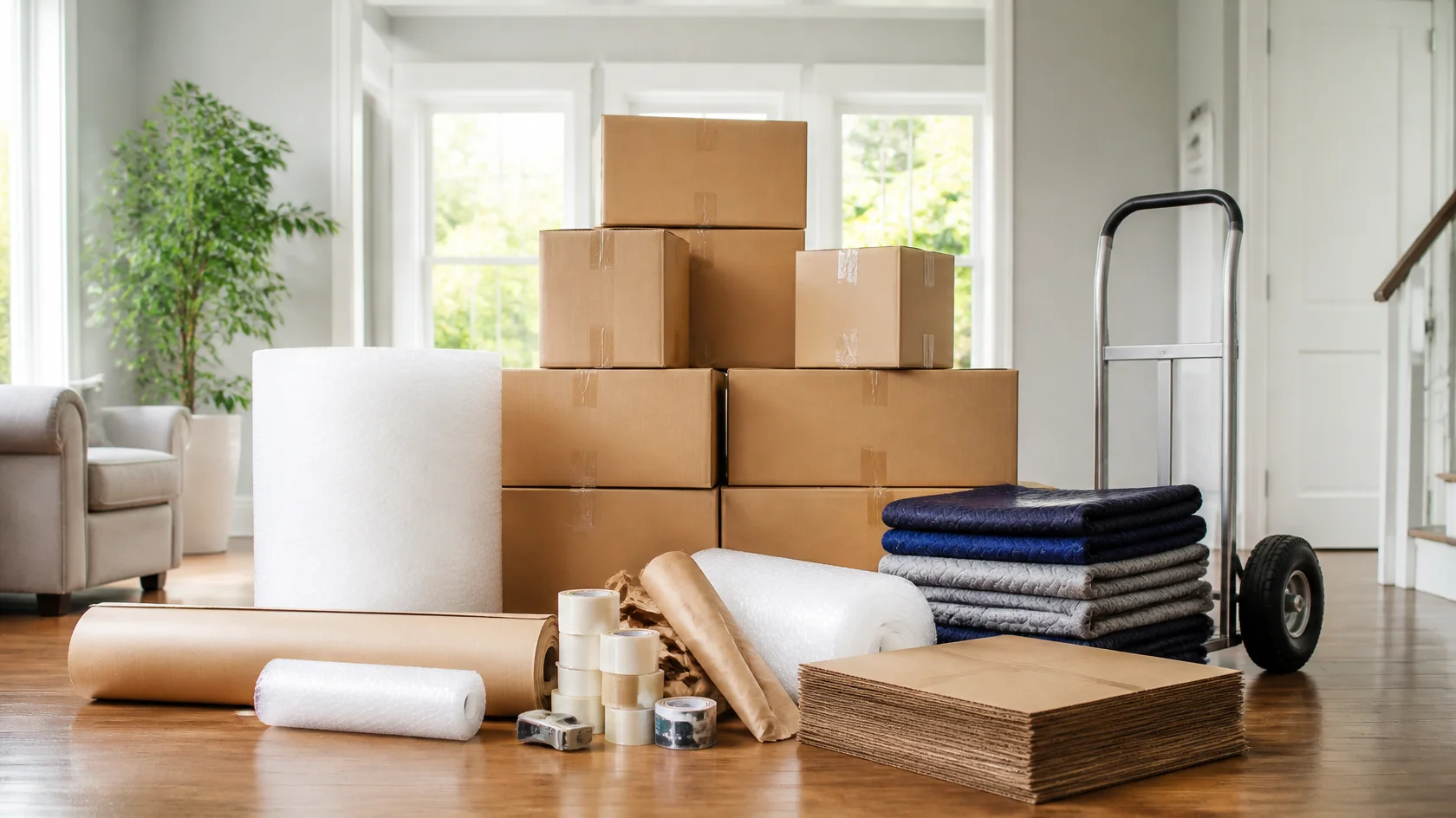
The Right Materials Protect More Than Boxes
Packing materials influence how safely belongings travel and how easily they can be organized at the destination. A weak carton, loose wrapping, or poorly chosen protective layer can allow items to shift, scratch, break, or absorb moisture. Good preparation uses different materials for different objects and considers how each box will be lifted, stacked, transported, and opened later.
A household move may require several types of cartons. Small boxes are useful for books, tools, and heavy items that should not be overloaded. Medium boxes can hold everyday household belongings, while larger cartons are better for lightweight items such as linens, pillows, and lampshades. Wardrobe boxes allow clothing to remain hanging, reducing creasing and making the first stage of unpacking easier.
Paper, bubble wrap, foam, stretch film, furniture blankets, corner protectors, tape, labels, and bags all serve different purposes. Wrapping should cushion an object without leaving excessive empty space, while boxes should remain light enough to lift safely. Furniture protection should prevent contact between surfaces and keep drawers, doors, shelves, and removable parts from moving during transport.
The best packing plan starts with an inventory. Identify fragile pieces, large furniture, appliances, electronics, artwork, mirrors, documents, and items that need special handling. This makes it easier to estimate the materials required and avoid rushing to purchase additional supplies on moving day. With the right preparation, packaging becomes part of a coordinated move rather than an emergency task completed at the last minute.
Choosing the Right Box for Each Item
Boxes work best when their size matches their contents. Books, records, tools, and canned goods should usually go into smaller cartons because their weight can become difficult to manage quickly. Larger boxes are suitable for blankets, towels, cushions, toys, and other lightweight belongings. Filling a large carton with heavy objects can make it unsafe to lift and may cause the bottom to fail.
Double-walled cartons can provide additional strength for heavier or more valuable items. Specialty boxes may be useful for mirrors, televisions, artwork, dishes, glasses, bicycles, lamps, and long objects. The appropriate choice depends on the item’s dimensions, weight, fragility, and the level of protection required during loading and transport.
Used boxes can be practical when they are clean, dry, rigid, and free from damage. Check the bottom, corners, flaps, and sidewalls before using them. A carton that has already been weakened by moisture or heavy loading may not provide dependable protection. Boxes should close without excessive bulging, and tape should secure the bottom as well as the top.
Avoid leaving large empty spaces inside a carton. Items can shift when the box is carried or when the truck moves. Fill gaps with paper, soft fabric, or suitable cushioning, but do not compress fragile objects. A correctly packed box should feel stable when lifted and should not make a loose rattling sound when moved carefully.
Protecting Fragile and Valuable Belongings
Fragile packing begins with separating objects that could damage one another. Glassware, dishes, ceramics, small artwork, and decorative pieces should not be left together without individual wrapping and internal cushioning. Heavier items should remain beneath lighter ones, while empty areas should be filled so pieces cannot slide into each other.
Paper is useful for wrapping and filling, but delicate surfaces may require foam, bubble wrap, or specialty sleeves. Bubble wrap should be used thoughtfully, particularly around polished or sensitive finishes. Mirrors and artwork may need rigid protection and corner reinforcement. Electronics should be cushioned on all sides, and their cables, remotes, and accessories should remain with the correct device in labeled bags.
Furniture protection reduces scratches and contact damage. Moving blankets can cover tables, sofas, cabinets, appliances, and bed frames, while stretch film can help keep drawers and doors closed when used appropriately. Film should not trap moisture against surfaces that need ventilation. Glass shelves, removable panels, and hardware should be wrapped separately and placed where they cannot press against heavier parts.
Photographs can improve the packing and unpacking process. Record the position of cables, the arrangement of shelves, the location of hardware, and the condition of valuable pieces before wrapping them. A simple note about existing marks can also be useful. Good records help distinguish moving damage from a condition that existed before the move and make reassembly more efficient.
Labels That Make Unpacking Easier
A labeling system saves time because it tells the moving team where each box belongs and helps the household find important items after arrival. Write the destination room on more than one side of the carton so the label remains visible when boxes are stacked. Add a short description such as “everyday kitchen,” “office cables,” or “bedroom linens” instead of using a general word like “miscellaneous.”
Color coding can provide an additional visual guide. Assign a color to each room and place a matching label or piece of tape on every carton. A simple priority mark can identify boxes that should be opened first. Keep a separate group for essentials such as medication, chargers, toiletries, documents, basic clothing, cleaning supplies, towels, and simple kitchen items.
An inventory does not need to be complicated. A spreadsheet, written list, or numbered box system can help track valuable belongings and confirm that important items have arrived. For a larger move, record the box number, room, general contents, and any special instructions. Keep the inventory in a place that travels with you rather than inside one of the moving cartons.
Labels should also indicate handling needs. Mark boxes that must remain upright, contain glass, should not be stacked, or need to stay dry. Clear instructions do not replace careful handling, but they give everyone involved better information. A few minutes spent labeling can save hours of searching and unnecessary box movement at the new property.
Materials for Furniture, Appliances, and Storage
Furniture often needs different protection from small household belongings. Blankets, pads, stretch film, straps, corner guards, and plastic covers can help protect wood, upholstery, metal, and painted surfaces. Drawers should be emptied, doors should be secured, and removable shelves should be wrapped separately. Large pieces may need disassembly so they can pass through doorways and staircases safely.
Appliances should be prepared according to their design. Refrigerators, washing machines, dryers, ovens, and other equipment may require disconnection, cleaning, drying, or special positioning. Some appliances need qualified assistance before they can be moved. Cords should be secured without crushing them, and loose accessories should be labeled and packed with the correct item.
Storage materials should keep belongings accessible and protected. Use rigid cartons where stacking is required, and avoid placing heavy objects on delicate furniture or fragile boxes. Leave space for air movement around items that could be affected by moisture. Seasonal belongings can be grouped together, while essential documents and frequently used equipment should remain easy to reach.
The property also needs protection during packing and loading. Floor runners, door covers, corner guards, hand trucks, ramps, and protective padding can reduce marks and impact. These materials are particularly useful in apartments, shared buildings, newly finished homes, and properties with narrow access. Protecting the route is part of protecting the move.
Choosing Professional Packing Support
When arranging packing services, ask what materials are included and whether the provider can handle fragile, oversized, valuable, or unusually shaped belongings. Some companies offer complete packing, while others can prepare selected rooms or the items that require the most experience. The right service depends on the customer’s time, budget, inventory, and comfort with doing part of the work independently.
Share useful information before the appointment. Photographs, the number of rooms, large furniture, artwork, electronics, appliances, stairs, elevators, and storage requirements can help the team prepare. Mention items that cannot be tilted, pieces that need disassembly, and belongings that should remain with the customer rather than entering the moving truck.
A written estimate should describe cartons, wrapping, specialty materials, packing labor, labeling, furniture protection, disposal, and any additional handling. Ask how unused materials are handled and whether boxes can be collected after unpacking. Clear information makes it easier to compare services and prevents confusion about what is included.
The goal of professional packaging is not simply to use more material. It is to use suitable materials in a thoughtful way. Proper cartons, cushioning, labels, furniture protection, and careful preparation help belongings arrive in good condition and make the new home easier to organize. With a clear system in place, Packaging and Materials Moving House support can reduce damage, save time, and make the relocation feel more controlled from packing day through final unpacking.